SharePoint Mentor Curated Articles
Introduction
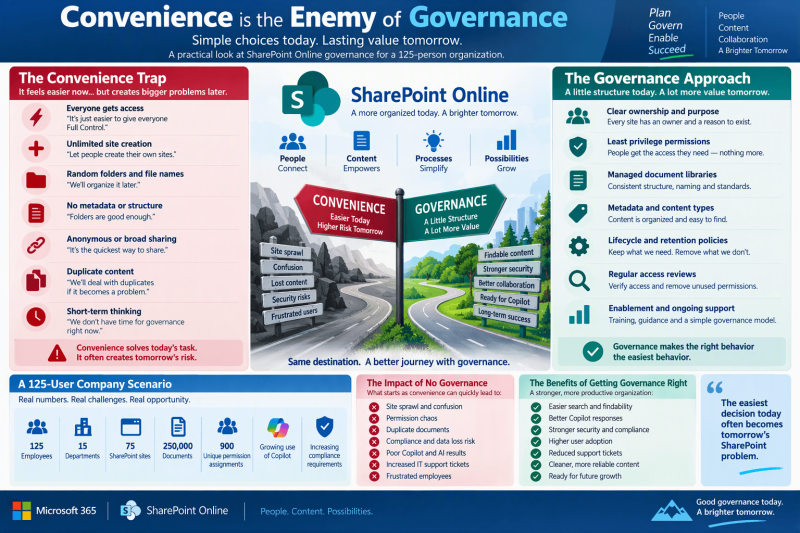
Organizations implementing SharePoint Online often discover that the easiest path for users is not always the best path for the business. The saying Convenience is the Enemy of Governance reflects the tension between making things simple in the moment and maintaining structure, security, compliance, and long-term sustainability.
Why Governance Matters
- In a company of approximately 125 employees, SharePoint becomes a business-critical platform for collaboration, document management, project delivery, and knowledge sharing. Governance provides standards for site creation, permissions, content management, ownership, retention, and lifecycle management.
The Convenience Trap
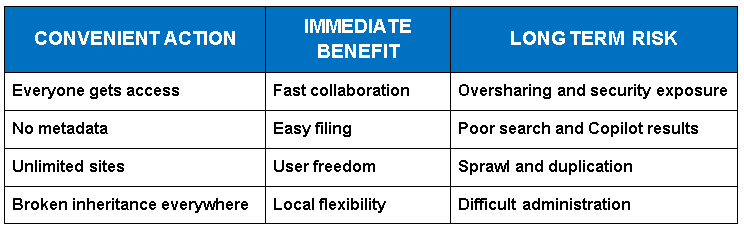
- Employees naturally look for shortcuts. They may share files broadly, grant excessive permissions, create duplicate sites, or store documents without metadata. Each shortcut saves minutes today but can create years of administrative and compliance challenges.
Common Examples
- Examples include giving everyone Full Control, creating folders instead of structured libraries, sharing links without reviewing permissions, bypassing naming standards, and allowing uncontrolled team and site creation.
Impact Areas
- Poor governance affects security, compliance, search quality, Copilot effectiveness, user experience, content discovery, records management, and support costs.
A 125-User Scenario
- As the environment grows, even a modest organization can accumulate hundreds of sites, thousands of folders, broken permission inheritance, orphaned content, and outdated information. The lack of governance eventually becomes visible through support tickets, user frustration, and operational risk.
Governance Principles
- Apply least privilege access, establish site ownership, define content accountability, standardize information architecture, implement lifecycle management, and periodically review permissions and content quality.
Copilot and AI Readiness
- Microsoft 365 Copilot and SharePoint agents depend on trustworthy content. When convenience leads to uncontrolled content growth, AI tools surface inconsistent information. Good governance improves trust, relevance, and the quality of AI-generated answers.
Balancing Governance and Usability
- The goal is not to eliminate convenience. The goal is to provide governed convenience. Templates, approved site requests, automated provisioning, metadata defaults, retention policies, and self-service guidance help users work efficiently while maintaining standards.
Conclusion
- In SharePoint Online, convenience and governance must be balanced. Convenience without governance leads to chaos. Governance without usability leads to user resistance. Successful organizations design processes that make the right behavior the easiest behavior.
Governance Decision Matrix